Showing posts with label contemporary realistic fiction. Show all posts

Wednesday, November 3, 2021

My Teacher is a Monster! (No, I am Not.)

Written & Illustrated by: Peter Brown

Genre: contemporary realistic fiction

Awards: N/A

Summary:

Bobby has the worst teacher; Ms. Kirby is loud, she yells, and if you throw paper airplanes, she won't let you play at recess. She is a monster! Luckily, Bobby can relax at his favorite spot in the park on weekends. One day, he finds his teacher sitting in the park! Bobby and Ms. Kirby spend the day together doing lots of fun things. They climb a mountain, quack with ducks, and even fly paper airplanes. Over the day, Bobby realizes that Ms. Kirby is less of a monster than he thought.

Teacher Evaluation:

Although this is a fun book, I don't think I would use it in my classroom. Kindergarten and first-grade teachers could use this book to teach kindness and understanding of others. Teachers could create a kindness chart that shows some ways to practice kindness in the classroom. The teacher could model the methods then allow students to do it themselves. Teachers could also have students talk about their likes or dislikes during school. Something unique about this story is that it sheds light on an important teaching strategy: being relatable to students. I think this would be a good reminder for teachers of all grades. 

I Pledge Allegiance

Written by: Libby Martinez & Pat Mora

Illustrated by: Patrice Barton

Genre: contemporary realistic fiction 

Awards: 

Denton Record-Chronicle Award, 2015

International Latino Book Award, 2015

CCBC Choices, 2015

Social Studies Trade Book for Young People, 2015

Summary:

Libby's great aunt, Lobo,  is preparing to become a United States citizen. She and Libby have been working diligently to memorize the Pledge of Allegiance for the upcoming citizenship ceremony. Libby's teacher is also letting her lead the morning Pledge recitation. The two practice the pledge very often, using every moment to get it right. They share stories and memories of why American citizenship is valuable to them. Libby successfully leads her classmates during the morning pledge and supports her aunt at the ceremony the next day. Libby and Lobo stand proudly with their hands over their hearts as they recite the Pledge of Allegiance at the citizenship ceremony.

Teacher Evaluation:

I think this is a great book and would be beneficial for a lesson on citizenship or analyzing language. For lower grades, kindergarten through second, I would use this book for teaching what it means to be a good citizen. We would define citizenship and give examples of good citizenship skills. We would also identify what it means to be a good citizen in the classroom, and I would help students practice citizenship daily. 

For older students, we would use this book as an introductory text for analyzing language. We would do a station assignment where each group would evaluate a different part of the story. Students will look for how the language used establishes the theme of the story. Students would then present their assigned section and explain their findings. 


Those Shoes

Written by: Maribeth Boelts

Illustrated by: Noah Z. Jones

Genre: Contemporary realistic fiction

Awards: 

               READ Boston Readaloud, 2007

               Notable Children's Video, 2010

               CCBC Choices, 2008

Summary:

At school, everyone has the newest pair of shoes-except for Jeremy. Everywhere he looks, he sees the shoes and is upset that he doesn't have them. Jeremy asks his grandmother to buy the new shoes, but she says that they don't have money for "wants." When Jeremy's shoe breaks and everyone laughs at him, he is even more anxious for black and white sneakers. Jeremy is luckily enough to find a pair of the new shoes at a thrift store, except they're too small. He buys them anyway, forcing himself to deal with the pain they cause. His friend Antonio also has broken shoes, but Antonio's feet are much smaller than his. Jeremy understands what Antonio is dealing with and gives the too-small sneakers to him. 

Teacher Evaluation: 

I think this book would be best for second-grade classrooms. Those Shoes would be my class' anchor text for two subjects: social studies and ELA. For our social studies lesson, we would establish the differences between wants and needs. We would then identify some things in our lives that we need and things we want. For the ELA lesson, we would complete a Think, Feel, Do assignment. Students will reflect on the story to clarify what they thought while reading. Then they will discuss their reflections and explain what they felt. Finally, we will discuss some ways to practice kindness and empathy to our peers. Students will need to complete a short writing assignment as they do each component. 


The Water Princess

Written by: Susan Verde

Illustrated by: Peter H. Reynolds

Genre: contemporary realistic fiction

Awards:   ALA Award for Notable Children's Book, 2017

Summary: 

Gie Gie lives in a beautiful village in Africa; she is the "princess" of her family and has dominion over the land around her. Unfortunately, she was missing one thing: clean water. Gie Gie and her mother travel daily to get water from the well. They deal with pain and tiredness but continue to demonstrate strength and courage. After the water is gone and the family is preparing for the next day, Gie Gie dreams of the future. She anticipates the day her village will have immediate access to clean water.

Teacher Evaluation:

The Water Princess would be suitable for second through fifth-grade classes. I would use this book to teach reading or STEM. I would have students create a story map identifying parts of the story plot. We would use this to demonstrate how plot points assist help students to comprehend the story. For older students, I would create a STEM project where they have to build water filters. We would discuss the importance of clean water and what societal changes we could make to ensure everyone has access to clean water. 

I would also use this book in a secondary geography class to discuss differences in world cultures. The illustrations and storyline of this book demonstrate unique aspects of the culture in Africa, making it an easy lead-in to defining culture. After this book, we would go on to higher-difficulty stories that demonstrate culture. 

Monday, November 1, 2021

The Invisible Boy

Written by: Trudy Ludwig

Illustrated by: Patrice Barton

Genre: Contemporary realistic fiction

Awards: 2013 NAPPA Gold Medal

Summary:
Brian is the invisible boy; everyone overlooks him and dismisses his presence in the classroom. He is last picked for all the games, sits alone at lunch, and no one invites him to any parties. When the new student, Justin, is introduced to the class, Brian sees an opportunity to make a new friend. Brian understands how Justin feels when the other students laugh at his lunch; Brian leaves Justin a note complimenting his unique culture. Justin and Brian connect over a love for art, and Justin is careful to include Brian throughout the school day. Brian has come out of his shell and is no longer the invisible boy.

Teacher Evaluation: 
I would recommend this book for first to second-grade classrooms for a lesson on sequencing. I would help students differentiate between the beginning, middle, and end of the story. We would discuss features that define each point of the story then students would complete a retelling assignment. Students would need to explain the story in their own words and draw pictures that match each event. I would also use The Invisible Boy to help students reflect on their classroom behavior and treatment of others.

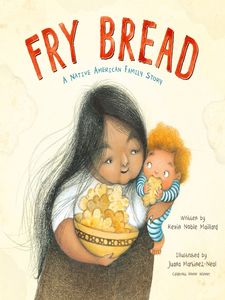
Fry Bread: A Native American Family Story

Written by: Kevin Noble Maillard Illustrated by: Juana Martinez-Neal Genre: poetry, informational Awards:  2020 Robert F. Sibert Information...